
By Dr. Gina Maccarone, MD, FACS, FAACS
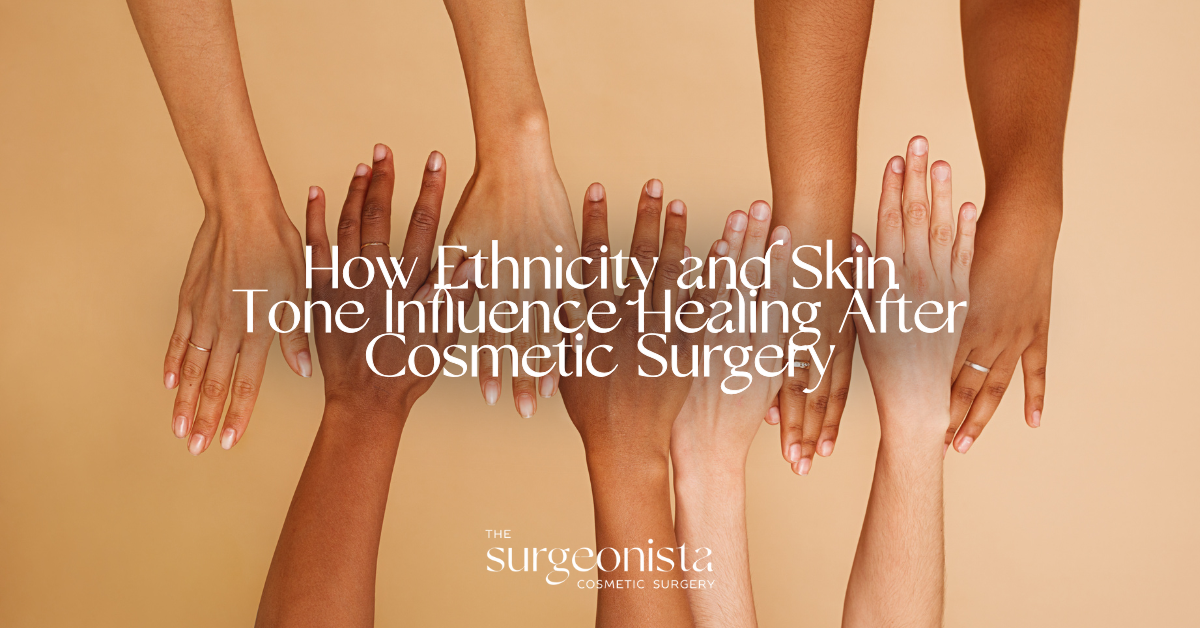
Every person’s healing journey is beautifully unique. When it comes to cosmetic surgery, one of the most fascinating aspects I see in my practice is how your skin, its tone, texture, and structure, can influence your recovery. These characteristics, deeply tied to your ethnicity and genetics, shape not just how your body heals, but how your results ultimately reveal themselves. Understanding those differences helps me honor each patient’s individuality through tailored care and precise technique.
The Role of Skin Tone in Healing
All skin, regardless of tone, follows the same biological process after surgery: inflammation, repair, and remodeling. But the way those stages appear on the surface can vary. In lighter skin tones, scars often begin red or pink before fading over time. In deeper complexions, the same healing process may result in temporary darkening (hyperpigmentation) or lightening (hypopigmentation) around incision sites. These pigment changes are a normal part of how melanin, the pigment that gives skin its color, responds to inflammation. Melanin itself is an incredible protector, shielding skin from UV damage and environmental stress. However, because it’s more reactive, darker skin tones can sometimes hold on to color changes longer during recovery. Over time, most pigment irregularities fade, revealing smooth, healthy, healed skin beneath.
Ethnicity and the Art of Surgical Planning
Your ethnicity isn’t just a reflection of your appearance. It’s also a map of how your skin behaves. Different ethnicities carry unique traits, from collagen density and elasticity to thickness and oil production. These distinctions matter deeply in surgery, influencing incision placement, tension, and closure technique. For example, Asian and Mediterranean skin types often have thicker dermal layers and higher collagen levels, leading to long-lasting surgical results but slower healing. Patients with African or Hispanic heritage may have a stronger inflammatory response, which can increase the likelihood of raised scars or pigmentation changes if not carefully managed. Fairer skin tones may heal quickly but can show redness or fine lines more prominently in early recovery.
In every case, my goal as a surgeon is the same: to tailor every step of your treatment to your skin’s natural biology, ensuring that incisions are placed within natural folds or shadowed areas for results that blend seamlessly with your tone and contours.
The Science Behind Healing Differences
What makes skin so dynamic is its structure. Collagen gives strength, elastin provides flexibility, and melanin adds protection. Together, they form a system that reacts uniquely in each person. Genetics play a key role here. Some individuals are simply more predisposed to producing excess collagen (which can lead to thicker scars), while others have more delicate tissue that heals with fine, almost imperceptible lines.
Lifestyle also influences healing. Nutrition, hydration, and sun protection all play vital roles in supporting your skin’s recovery. Regardless of ethnicity, maintaining healthy circulation and avoiding inflammation, through habits like not smoking and protecting healing skin from sun exposure, can dramatically impact your results.
Healing as a Reflection of Diversity
One of the most rewarding parts of my work is seeing how beautifully different skin types heal. Every complexion tells a story of resilience, heritage, and individuality. Cosmetic surgery should never aim to erase that; it should celebrate it. My mission has always been to honor what makes each patient unique, enhancing balance and harmony without compromising the natural essence of their beauty.
Healing is never one-size-fits-all, and that’s what makes it remarkable. By understanding how your skin responds and respecting the science behind it, we create not just beautiful results, but results that are authentically yours.
Xo,
Dr. Gina Maccarone