
By Dr. Gina Maccarone, MD, FACS, FAACS
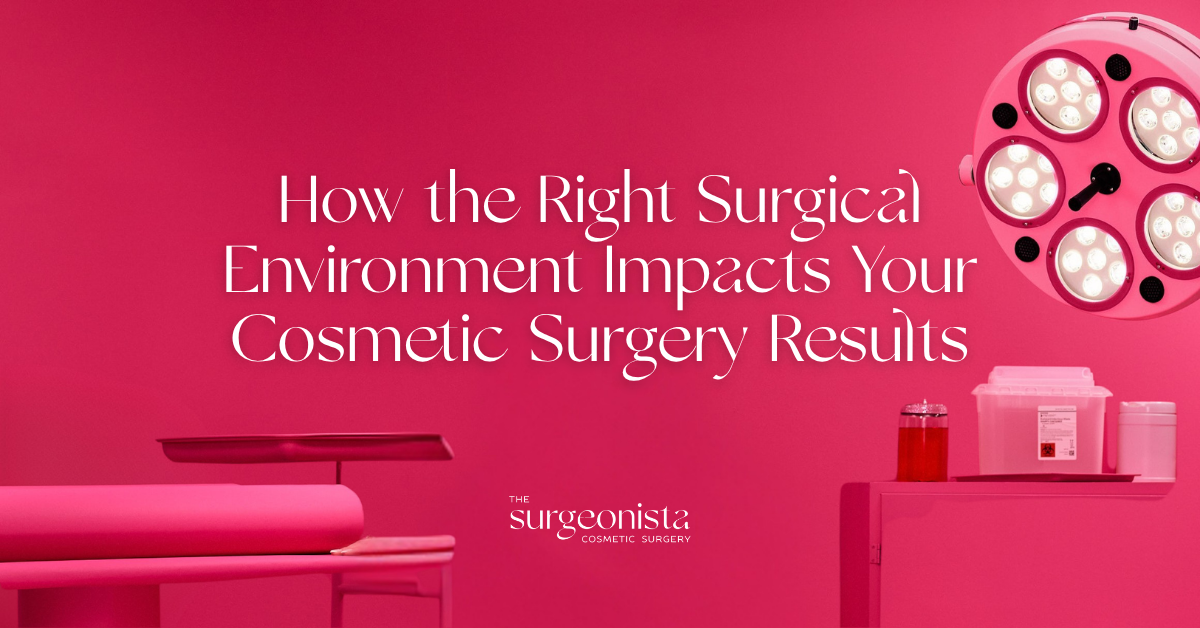
When patients think about cosmetic surgery, most of the focus naturally goes to the procedure itself: what will be done, how it will look, and when they’ll see results.
But in reality, outcomes are shaped by much more than the procedure alone. They are influenced by the environment in which care is delivered, the team supporting you, and the systems in place before, during, and after surgery.
Cosmetic surgery is often thought of as a single event, but it is better understood as a process, one that relies on coordination, preparation, and careful execution at every stage. Safe, thoughtful surgery is not the work of one person alone. It is the result of a system of care, where the surgeon, anesthesia provider, nursing team, and surgical facility all play a role in supporting both safety and outcome. When these elements are aligned, the experience feels more controlled, more supported, and ultimately more predictable.
The setting where surgery takes place is an important part of that system. Accredited surgical facilities are designed with patient safety in mind, with protocols, monitoring systems, and equipment in place to support patients throughout the procedure and recovery. While these details may not always be visible, they create the foundation that allows surgery to be performed safely and with greater precision.
Anesthesia is another critical component of this environment. Throughout the procedure, vital signs are continuously monitored, and adjustments are made in real time to maintain stability. This level of attentiveness allows for a smoother surgical experience and supports the body during a process that requires careful balance and control.
What happens immediately after surgery is just as important. Recovery does not begin when you return home. It begins the moment the procedure is complete. The early post-operative period is when the body begins to respond to what has been done. Close monitoring, thoughtful pain management, and attentive nursing care all influence how that process unfolds. When patients are supported during this phase, healing tends to be more comfortable and more predictable, allowing results to settle gradually and naturally over time.
In many ways, cosmetic surgery results are not created in isolation. They are shaped by everything that surrounds the procedure: the preparation, the environment, and the care that continues afterward. When each part of that process is approached with intention, the outcome is not only safer but more refined.
Final Thoughts from Dr. Gina
The best outcomes in cosmetic surgery are not the result of a single decision. They are the result of many thoughtful choices, about the procedure, the timing, and the environment in which care is delivered. Because when every part of the process is supported with care and intention, patients are better positioned to heal well and achieve results that feel natural, balanced, and lasting.
Xo,
Dr. G.